
Choose your country / language
Global
Americas
-
 Argentina
-
 Brazil
-
 Canada
-
 Mexico
-
 USA
USA
Europe
-
 Austria
-
 Belgium
-
 Czech Republic
-
 Finland
-
 France
-
 Germany
-
 Hungary
-
 Italy
Italy
-
 Luxembourg
-
 Netherlands
-
 Poland
-
 Portugal
-
 Romania
-
 Slovakia
-
 Sweden
-
 Turkey
-
 United Kingdom
Asia
-
 China
China
-
 India
India
-
 Indonesia
-
 Japan
Japan
-
 Korea
Korea
-
 Malaysia
-
 Philippines
-
 Singapore
-
 Vietnam

Output instead of downtime – the coating makes the difference DLC coated blow molds improve uptime and efficiency in PET hot fill applications
Stretch blow molding machines produce tens of thousands of PET bottles per hour for demanding hot‑fill beverages. To keep high‑volume production stable, blow molds must withstand extreme loads – an area where Röders draws on more than 50 years of engineering expertise. For steel molds used in hot‑fill applications, the mold maker in Soltau recommends the DLC coating BALINIT® DYLYN PRO from Oerlikon Balzers. A customer in the U.S. cut cleaning effort for its steel molds to about one quarter and significantly reduced costly downtime.
In the hot‑fill process, non‑carbonated beverages such as juices, iced teas, or sports drinks are typically filled at 85 to around 100 °C. PET (polyethylene terephthalate) is well suited because stretch blow molding can form temperature‑ and vacuum‑stable bottle geometries. At the same time, requirements for the blow mold increase: the heated preform must flow reliably under high blow pressure, fill the cavity completely, and release cleanly afterward.
Röders has helped shape PET blow mold technology since the 1970s. Over the decades it has shipped several hundred thousand blow molds to customers worldwide; current capacity is around 7,000 molds per year and lead times are typically short. The backbone is Röders’ own HSC (high‑speed cutting) milling machines, which can produce high‑gloss surfaces down to Ra < 10 nm – without manual repolishing.
Links

Helge Heuer (left) and Steffen Lühning (right) of Röders inspect one of the blow molds together with Jens Oppermann of Oerlikon Balzers. The mold was manufactured on Röders’ in house milling machines and subsequently coated. Photo: Oerlikon Balzers
DLC coated blow molds improve process stability
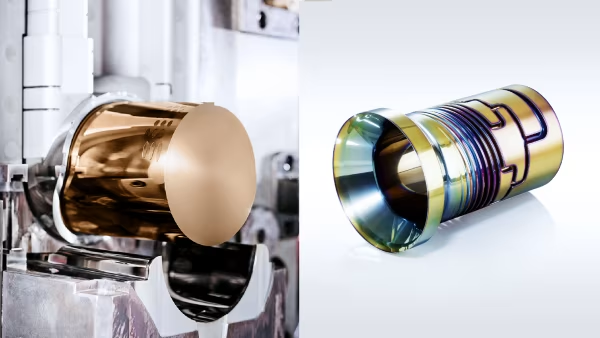
BALINIT® DYLYN PRO adds further process robustness. The carbon‑based DLC (diamond‑like carbon) coating was developed for applications in the food and medical industries, is chemically harmless, and is certified by the U.S. Food and Drug Administration (FDA). It protects against corrosion and wear and, thanks to the non‑sticking blow mold coating, friction and abrasion are reduced at the interface between mold and PET. This mitigates stick‑slip: the hot polymer is less likely to adhere, stop abruptly, and tear. The result is improved material flow, more uniform cavity filling, easier demolding, and higher optical bottle quality – especially in critical areas. Above all, production stability and economics benefit.
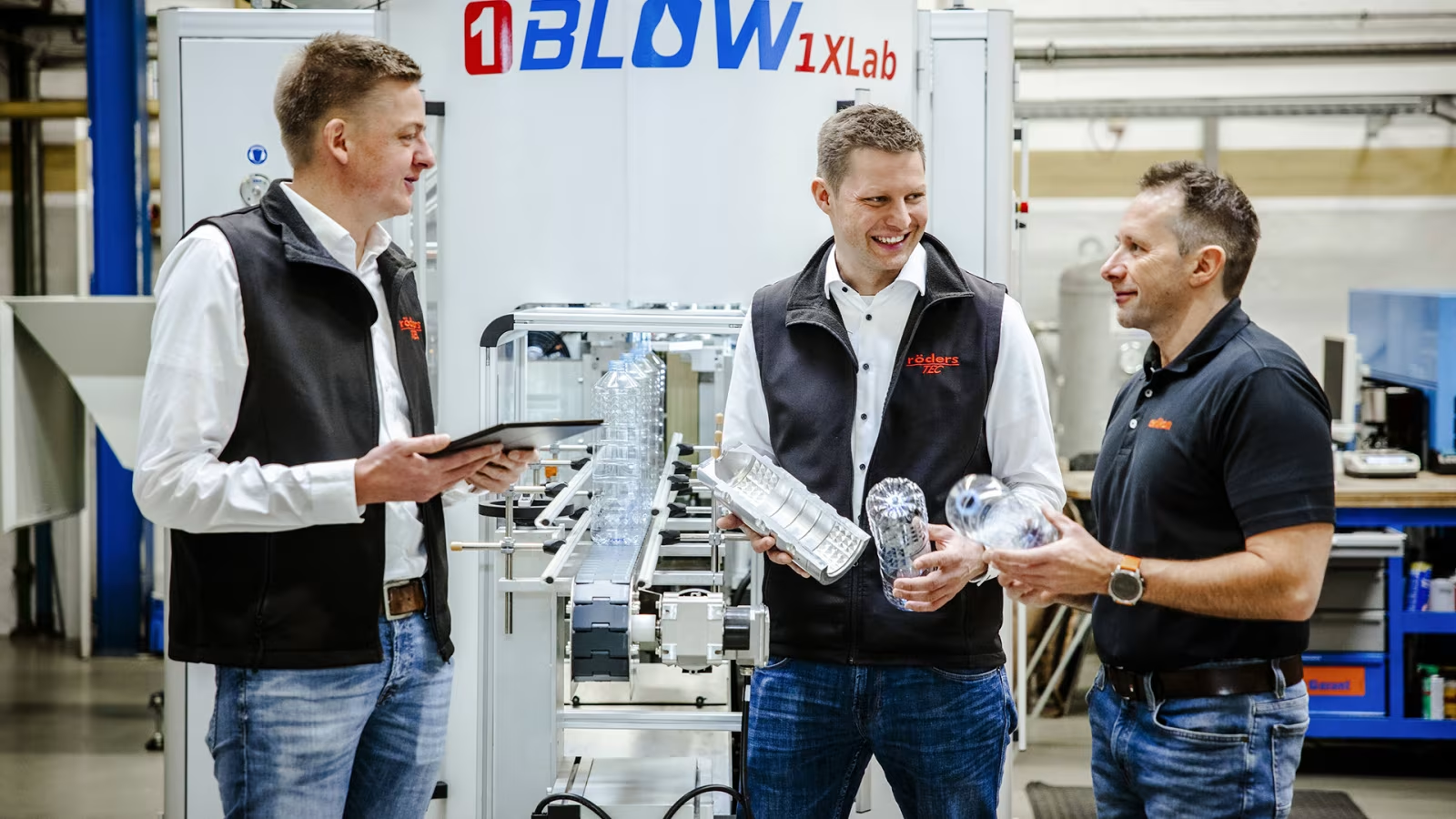
In high volume PET bottle production, blow molds play a key role. Preliminary tests in Röders’ bottle and blow molding laboratory provide valuable insights, explain Steffen Lühning and Helge Heuer of Röders as well as Jens Oppermann of Oerlikon Balzers (from left). Photo: Oerlikon Balzers
Less downtime, faster cleaning, higher overall equipment effectiveness (OEE)
In practice, a U.S. Röders customer now has to stop its stretch blow molding machines only once per 8‑hour shift for mold cleaning; previously, several stops were required. Cleaning time has also been reduced because deposits can be removed faster. “On large lines with 20 blow stations and an average output of around 30,000 bottles per hour, the cost effects in continuous high‑volume operation add up significantly,” says Steffen Lühning, Sales Manager Blow Molds at Röders. Less downtime has an immediate impact on overall equipment effectiveness (OEE), unit costs, and delivery capability – and can deliver a fast return on investment relative to coating costs.
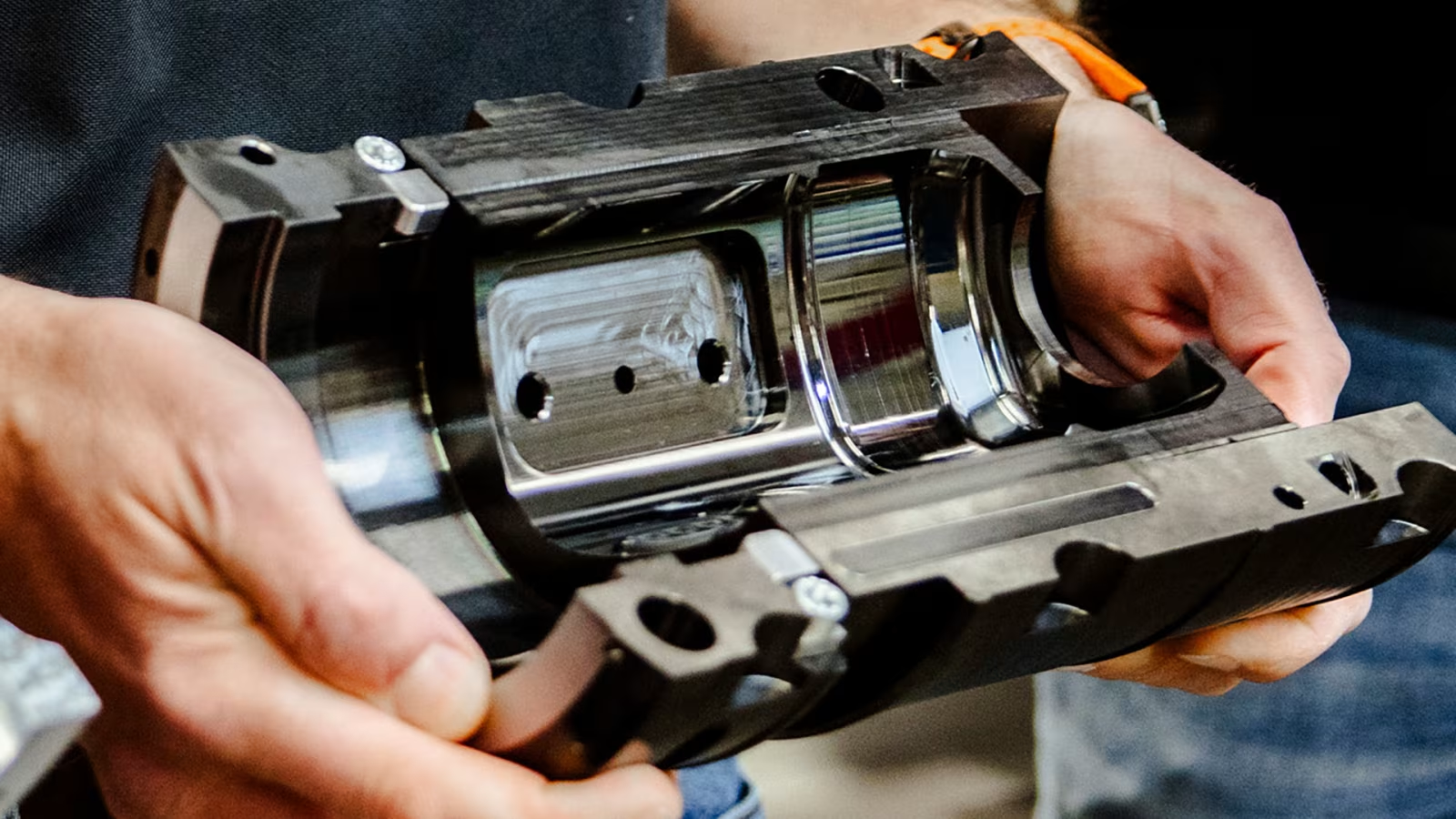
Blow molds from Röders are distinguished by exceptionally high surface quality. The DLC coating BALINIT DYLYN PRO from Oerlikon Balzers significantly reduces friction and ensures excellent demolding. Photo: Oerlikon Balzers
Supporting rPET processing in hot fill applications
“In some cases, blow pressure – and therefore energy consumption – can even be reduced, which is a major advantage in regions with high energy costs,” adds Helge Heuer, Technical Sales Manager Blow Molds at Röders. The non‑stick effect also supports the growing use of recycled PET (rPET): quality fluctuations can promote deposits on molds if the blow process is not adjusted accordingly, and coated surfaces counteract this effect.
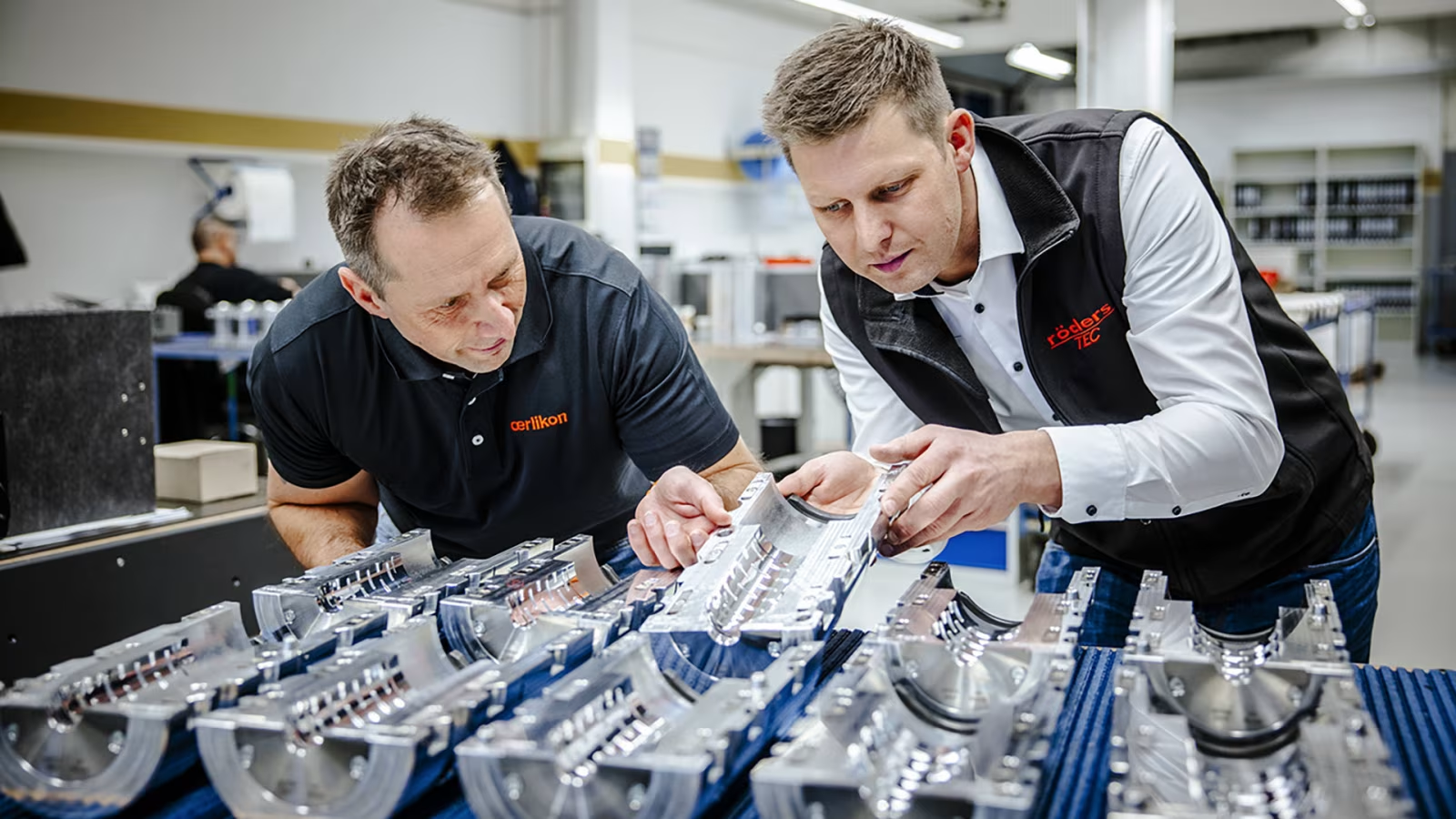
To enable longer machine runtimes for PET bottle manufacturers, Jens Oppermann of Oerlikon Balzers and Helge Heuer of Röders (from left) work closely on robust, low‑maintenance coated blow mold solutions. Photo: Oerlikon Balzers
About Röders GmbH
Founded around 1800 as a pewter foundry, today’s Röders GmbH has been family-owned for six generations and operates in three main business fields: milling and grinding machines, blow molds for PET bottles, and pewter products. With around 600 employees worldwide, Röders maintains subsidiaries in China, France, Canada, Taiwan, the United States, and Vietnam.
At its German headquarters in Soltau, the company runs a technology center dedicated to the development of advanced blow mold technology and process optimization – for example through quick-change systems or reduced blow pressure and energy consumption using low-pressure mold bases. Röders cooperates with leading blow molding machine manufacturers and bottlers; its bottle and blow molding laboratory is certified by PepsiCo and authorized by Coca‑Cola Europacific Partners.
-
pdf ()
Technical article: Output instead of downtime – the coating makes the difference: DLC-coated blow molds improve uptime and efficiency in PET hot-fill applications
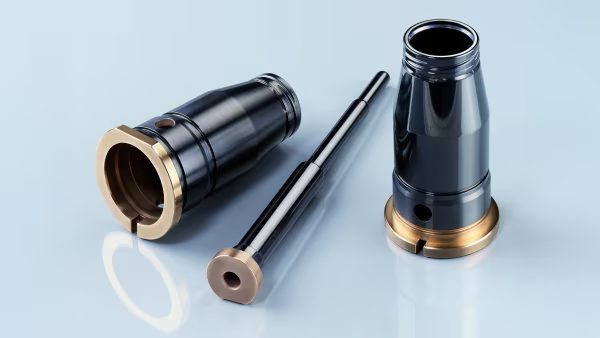
BALINIT DYLYN
Ideal wear protection and reduction of coefficient of friction for plastics processing
Plastics Processing
Contact